Rules and Regulations
Version: 2027
All the details you need to know!
Clarifications
Please see below for any clarifications to the Rules and Regulations, as well as frequently asked questions.
1Is there an age range for the Masters division? Junior division?
Please see Competition Regulations, Section 3.1 - Age Restrictions.
2If someone is an amateur, or a semi-pro, but over the age of 40, do they have to compete only in the Masters division?
The non-specialized adult levels, such as Amateur, Semi-Pro, Hoop 1, etc., are open to all genders and ages (16+ or 18+). Our specialized categories offer those 40+ or male-identifying a separate category which they can elect to compete in, but there is not a requirement that they must. An athlete aged over 40 is welcome in other divisions or levels, not only Masters.
3Must I compete in the competition located in my province, or in closest proximity to my address?
There is no restriction for registration based on your address. You are welcome to register at the competition of your choice.
4Is an athlete limited to attending one regional competition?
There is no limit of the number of competitions, divisions, or levels you may register for. However, a competitor can only receive 1 invitation per division/level to Nationals. For example, if a competitor placed 3rd in Amateur in both Centrals and Easterns, they would receive 1 invitation to compete in Amateur at Nationals, and the extra invitation may be provided to the competitor with the next highest score.
5Last year I competed in / placed in my level in CPAC – does that require me to level up with CPAC?
You are welcome to enroll in the same division/level as last year, provided you do not fall under any of the posted restrictions (see Rules - Division and Levels). Champions from each level are invited to either defend their title in the same level or move up a level.
6Last year I placed at a certain level in another competition? Does that require me to level up with CPAC?
There is no specific requirement to "level up" based on your placements in other competitions, which use different judging criteria. However placing at a higher level in another competition may restrict you from applying for entry or amateur levels, or indicate you should be competing at a professional level, as per listed Restrictions (see Rules - Divisions and Levels).
7What level should I compete in after a long hiatus from training and/or competitions?
We understand that various athletes will be returning to competitions after hiatus, for various reasons. You are able to register in the level which feels most appropriate to your current skill set and goals for the competition.
8How will I be judged and compared to other athletes?
Please refer to the Judging Criteria document found on our Rules and Regulations page for full details on what competitors are judged on. The CPAC does not follow a Code of Points or have mandatory compulsory movements, therefore athletes have the opportunity to choose to put their best skills forward, that they can execute to the best of their abilities. An athlete who chooses to include a skill for which they do not have a strong level of execution, will score lower on the Execution continuum than if they chose a skill they can execute cleanly.
9Are Fabpole/polesilks allowed in Aerial Specialty?
While we would love to accommodate all kinds of aerial performances, there are some technical limitations that prevent us from allowing Fabpole/polesilks in our Aerial Specialties level. This is not a new rule for CPAC when using our equipment and rigging for in-person events. Specifically towards Aerial Specialty, poles are not installed during Aerial Sport competition. Installing the poles takes a considerable amount of time and effort that would disrupt the flow of the competition if we had to make this change between performers in the Aerial Specialty category. For consistency between all performers, as per Competition Regulations, Section 5.1.6 Aerial Specialty Technical Specs: "The specialty aerial apparatus will be rigged from the center point on the stage and will be 8 feet from front and back of the stage and 12 feet from each side. The connection point will be a carabiner to a single swivel, from a single rigging point approximately 14 feet above the stage."
10Are aerial combinations permitted in Floor Flow?
“All skills must begin and end with a minimum of 1 body part in contact with the floor.” This means that each individual skill must either start or end in contact with the floor. If describing an aerial combination of multiple skills, (example: invert – outside leg hang – jade split – inverted cross – handstand on the floor) each transition between skills must include contact with the floor.
11Can you tell me how you'd differentiate someone at the Semi Pro vs Professional or Level 1 vs Level 2?
There is not a specific skill set which defines Semi-Pro vs Professional divisions. These levels are typically differentiated by the overall uniqueness, quality and execution of the performance as a whole. Selecting between these levels is a competitor's choice. You are able to register in the level which feels most appropriate to your current skill set and goals for the competition, provided you do not fall under any of the posted restrictions (see Rules - Division and Levels).
12May I compete if I am NOT a Canadian Citizen/resident?
Yes, our events are open to all individuals! You can read full details under Competition Regulations, Section 1.1: Regulations Governing Competition Applicants. Please note that for Professional divisions only:
Applicants for PROFESSIONAL level must self-certify at the time of application, their status as a Canadian Citizen or Permanent Resident OR as a non-Canadian Citizen. Only applicants self-certified as a Canadian Citizen or Permanent Resident will be permitted to hold the title of Professional Canadian Pole and Aerial Champion to represent Canada in world competitions.
13How do I know the event schedule / which day I am competing?
For event-specific dates and timing, such as schedule release, you should review the event web page under "Important Dates", as well as the event-specific Competitor Packet available through the event webpage.
Athletes are only required to attend the event on the date of their division. All stage rehearsals, divisions and awards are run on the same day, for example Aerial Sport stage rehearsal, followed by Aerial Sport competition and Aerial Sport awards ceremony. Each division (Aerial Sport, Pole Sport and Artistic) are run separately. Unfortunately, we are not able to provide detailed schedules as to timing of individual competitors until the close of registration, when final numbers are known. To facilitate travel arrangements, Division allocations may be released early for select events (for example Aerial Sport on Saturday, Pole Sport and Artistic on Sunday).
14Can I submit my prop for pre-approval in Artistic Division?
Props are permitted, and do not require approval for all Artistic Divisions, but we will note those provided if submitted by the competitor. If Artistic competitors would like your props approved prior to the event you are always welcome to submit a prop submission video for pre-approval following the Prop Pre-Approval Process (See Competition Regulations, Props).
15How does registration work for additional competitors in doubles or troupe?
Doubles and Troupes are separate divisions, with distinctly separate scorecards. Only one registration is required for doubles or troupes. A separate registration link will be sent by email for additional competitors so they can complete the required waivers.
If one photo and video package is purchased, this is for the performance as a whole, rather than for each competitor. By purchasing one media package, you receive one video and twelve (12) photos of your routine.
16Is my routine more appropriate for Pole Sport or Pole Art?
Ask yourself, is your routine based on showcasing your tricks, or are your tricks included to tell a story?
Pole Sport is weighted higher on technical elements, such as individual skills and combinations; with artistry and presentation to complement in order to create a cohesive performance.
Pole Art is weighted higher on artistic elements, such as storytelling and theme; with skills and combinations incorporated to further communicate the theme in order to create a cohesive performance.
17What is the definition of an Open Wrap Drop?
An open wrap drop consists of a drop wherein the drop does not end in a position wrapped, locked or in the sling of the hammock. This may require a hand catch to complete the drop and would typically be conducted on the exterior of the hammock or higher on the pole of the fabric. At this time the CPAC does not have the height or safety measures in place to support the inclusion of these skills in our events
18Is this word considered profanity?
We do not have a list of words which are considered profanity. The highest consideration should be the context of the wording.
The context of the wording must be considered with respect to permitted Movements and Themes and whether in contradiction with the CPAC Commitment to Diversity and Inclusion
The word "shit" is not specifically disallowed in Sport or Artistic, please review context (above).
The word “bitch” is not specifically disallowed in Artistic. The word "bitch" can be considered to be used in an offensive or derogatory manner, which is in contradiction to the CPAC commitment to diversity and inclusion. The manner can also be considered coarse or offensive, which is not suitable for all audiences, and not approved in Sport divisions. For example, the word bitch which may not be appropriate in Sport, may be appropriate in After Hours if the lyric is in the spirit of (for example) "I'm a bad bitch", but may not be allowed where the spirit is abusive or derogatory towards an individual or group.
The context of the wording must be considered with respect to permitted Movements and Themes and whether in contradiction with the CPAC Commitment to Diversity and Inclusion
The word "shit" is not specifically disallowed in Sport or Artistic, please review context (above).
The word “bitch” is not specifically disallowed in Artistic. The word "bitch" can be considered to be used in an offensive or derogatory manner, which is in contradiction to the CPAC commitment to diversity and inclusion. The manner can also be considered coarse or offensive, which is not suitable for all audiences, and not approved in Sport divisions. For example, the word bitch which may not be appropriate in Sport, may be appropriate in After Hours if the lyric is in the spirit of (for example) "I'm a bad bitch", but may not be allowed where the spirit is abusive or derogatory towards an individual or group.
19Is this skill (gemini flip, butterfly flip, jasmine flip, brass monkey flip) considered a flip, and permitted in Amateur?
While we cannot guarantee the suitability of a move based on name alone (as naming and interpretation can vary across studios and regions), where skills are regarding a dismount, wherein one body part is connected to the pole throughout the maneuver, and the final position is standing on the floor maintaining connection to the pole. This would be considered a jumpoff, and acceptable in amateur pole sport.
20Do you offer any Aerial levels in the Artistic Division?
We do not have any Artistic levels for our Aerial Divisions at this time. We encourage you to express interest so we can consider additional categories for future competition seasons.
21Do you offer projections or custom lighting in Artistic Division?
We are not able to offer projections or lighting effects at this time. We are committed to offering consistency and equal stage experience for all competitors nation-wide For this reason, we do not include projections or lighting queues in our contracts with venues.
22I am an instructor but have only recently started teaching / only teach low levels. Am I able to compete in Amateur?
You would be welcome to compete in either the Amateur/Level 1 or Semi-Professional levels, depending on your self-assessment. Amateur is still an appropriate level while competitors are a newer instructor. Instructors are not permitted in Entry, while instructors who teach at a high level are required to compete in Semi-Pro and Professional. Amateur is an appropriate level for someone newer to instructing, or solely instructing at a lower level.
23Is the Ayesha (or Inverted D) to inside leg hang drop permitted in Amateur/Level 1?
While we cannot guarantee the suitability of a move based on name alone (as naming and interpretation can vary across studios and regions), we note the difference between Ayesha to Leg Hang (NOT permitted) versus Inverted D to Leg Hang (Permitted):
• Ayesha to Leg Hang: Wherein the starting position of Ayesha has NO contact between the pole and legs/ankle and is held in a handspring position, a descent dropping directly to leg hang would not be permitted as the hips would pass below the shoulders through the handspring position.
• Inverted D to Leg Hang: Wherein the starting position of Inverted D maintains contact between the pole and legs/ankle and is NOT held in a handspring position, a descent transitioning directly to leg hang would be permitted as the hips would pass below the shoulders without being held in a handspring position.
• Ayesha to Leg Hang: Wherein the starting position of Ayesha has NO contact between the pole and legs/ankle and is held in a handspring position, a descent dropping directly to leg hang would not be permitted as the hips would pass below the shoulders through the handspring position.
• Inverted D to Leg Hang: Wherein the starting position of Inverted D maintains contact between the pole and legs/ankle and is NOT held in a handspring position, a descent transitioning directly to leg hang would be permitted as the hips would pass below the shoulders without being held in a handspring position.
24Do the Grip Aid restrictions apply to Aerial Specialty?
No, they do not. For Aerial Speciality you may use grip products of choice on your personal apparatus. The grip restrictions listed are specific to shared, standardized apparatuses.
25Is the Crucifix position allowed in Entry?
Yes, the crucifix position is permitted from your basic side mount inversion.
26Is Trick-Tac approved as a grip aid, though it is beeswax-infused?
Unfortunately, we cannot list and provide approval for every grip product available, so we do ask our competitors to make a reasonable assessment of whether their grip product may leave a sticky residue which is difficult to remove from the apparatus. This product is reported to be easily wiped off. If you find that this is consistently a product which easily wipes off with alcohol-only, this would be acceptable to try in our 2024 events.
27Does the Aerial Specialty include Trapeze? Straps? Silks?
The aerial specialty division includes any apparatus which does not follow the Apparatus Technical Specs. Competitors are permitted to provide their own apparatus to the CPAC event. Apparatus may include, but is not limited to: Aerial Pole, Chains, Chandelier, Corde Lisse, Crescent, Cube, Static Trapeze, Ladder, Mini Lyra, Net, Straps, etc.
You are welcome to submit any apparatus for approval prior to registration if your apparatus is unique. Please be aware of the rigging and proof of manufacture requirements as listed in the regulations.
You are welcome to submit any apparatus for approval prior to registration if your apparatus is unique. Please be aware of the rigging and proof of manufacture requirements as listed in the regulations.
28In Floor Flow is a fan kick / drop to floor / spins on spin pole permitted?
“All skills must begin and end with a minimum of 1 body part in contact with the floor.” This means that each individual skill must either start or end in contact with the floor.
• A fan kick which ends in contact with the floor, such as a drop split, would be permitted
• A spin on the spin pole which ends in contact with the floor, such as landing on the ground, or a hand touching the floor, would be permitted
• A spin on the spin pole which does NOT end in contact with the floor, such as a back hook to an invert or a sit, would not be permitted
• A fan kick which ends in contact with the floor, such as a drop split, would be permitted
• A spin on the spin pole which ends in contact with the floor, such as landing on the ground, or a hand touching the floor, would be permitted
• A spin on the spin pole which does NOT end in contact with the floor, such as a back hook to an invert or a sit, would not be permitted
29Is athletic tape / KT tape permitted (such as if recovering from an injury)?
Yes, this is permitted, we support competitors on the side of caution / safely.
30Is a move considered a neck hang if another body part (arm, leg, etc) is also supporting the body weight?
No, this would not be considered a neck hang. A single point hang (neck, heel, elbow, etc) is considered when a single point bears the full body weight.
31Do you offer a livestream for regional events, or only the National event.
At this time we only offer virtual viewing options for our National event, where a larger majority of friends and family are located outside the venue region. Our regional events offer in-person attendance only, however competitors are welcome to have friends capture a video with their personal device (phone) to share online for those unable to attend in person.
32Can I bring my own apparatus / different length of strop and still compete in Aerial Hoop / Aerial Hammock?
In CPAC events, an athlete has the right to consistent apparatus and mats which conform to specifications and apparatus norms, set for all athletes, at all events across Canada. Athletes are not permitted to modify/supply their own apparatus with the exception of Aerial Specialty. The Aerial Specialty level is specifically available for those competitors who would prefer to present a routine on a non-standardized apparatus.
33Are sticky fabrics permitted? Such as grippy knee pads, grippy leggings?
Sticky fabric (tops, bottoms) follow the same restrictions as indicated for Gloves (Section 3.5 Grip Aids), being allowed on bar apparatuses but not permitted on fabrics.
34Is Grip & Glow grip product permitted in CPAC events?
While we do not have direct experience with this product in our events, based on the ingredients list this would be acceptable in our events in 2024.
Unfortunately, we cannot list and provide approval for every grip product available, so we do ask our competitors to make a reasonable assessment of whether their grip product may leave a sticky residue which is difficult to remove from the apparatus. If you find that this is consistently a product which easily wipes off with alcohol-only, this would be acceptable in our events.
Unfortunately, we cannot list and provide approval for every grip product available, so we do ask our competitors to make a reasonable assessment of whether their grip product may leave a sticky residue which is difficult to remove from the apparatus. If you find that this is consistently a product which easily wipes off with alcohol-only, this would be acceptable in our events.
35Is Monkey Hands grip product permitted in CPAC events?
Based on the ingredients list Monkey Hands Classic and Monkey Hands Sticky would be acceptable in our events in 2024. Monkey Hands Gluey, which contains resin, would not be permitted.
Unfortunately we cannot list and provide approval for every grip product available, so we do ask our competitors to make a reasonable assessment of whether their grip product may leave a sticky residue which is difficult to remove from the apparatus. If you find that this is consistently a product which easily wipes off with alcohol-only, this would be acceptable in our events.
Unfortunately we cannot list and provide approval for every grip product available, so we do ask our competitors to make a reasonable assessment of whether their grip product may leave a sticky residue which is difficult to remove from the apparatus. If you find that this is consistently a product which easily wipes off with alcohol-only, this would be acceptable in our events.
36Are nude fabrics, cutouts, mesh or see-through materials permitted in Costuming?
Nude fabrics, cut-outs, mesh and/or see-through materials are all acceptable provided that they satisfy the Costume Regulation stipulation that private parts are not visible, for example, through the fabric.
Please note we understand that costumes shift during performance, and cannot guarantee a costume's suitability based on a static photograph. We recommend referring to the Costume Regulations and any posted Clarifications. The competitor is responsible for sufficiently securing the costume in place if there is a concern for movement and potential exposure of private parts during the performance.
Please note we understand that costumes shift during performance, and cannot guarantee a costume's suitability based on a static photograph. We recommend referring to the Costume Regulations and any posted Clarifications. The competitor is responsible for sufficiently securing the costume in place if there is a concern for movement and potential exposure of private parts during the performance.
37Are regrips permitted in Amateur?
Regrips/grip switches which consist of a dynamic release of one body part from the apparatus, to catch / regrip in a new position wherein the body position CANNOT be held without regrip are considered extreme strength and therefore not permitted in Amateur. For example, regrip from true grip to cup grip in a handspring position would not be permitted, whereas changing the grip from true grip to twisted grip in a caterpillar/butterfly position would be permitted as the legs are still in contact with the pole and holding the body position.
Please see the Divisions and Levels regulations, Move Caps – FLIPS AND TUMBLES - NOT ALLOWED - Release Skills.
Also see Section 2.4 DEFINITIONS for full definitions of partial and full release skills.
Please see the Divisions and Levels regulations, Move Caps – FLIPS AND TUMBLES - NOT ALLOWED - Release Skills.
Also see Section 2.4 DEFINITIONS for full definitions of partial and full release skills.
38What are Stage Left and Stage Right?
Stage left and stage right refer to the performer's perspective facing the audience.
39Does "no release skills (drops)" apply to full release, partial release or are any drops allowed?
Please see Divisions and Levels, Section 2.4 - Definitions. In Aerial Sport Level 1, no release skills are permitted, including full release, partial release, and drops. Slides and rollouts are permitted.
40Is this skill allowed aerially in Pole Entry?
While we cannot guarantee the suitability of a move based on name alone (as naming and interpretation can vary across studios and regions), we can offer the following clarifications:
• If the entry was from a climb, the only aerial skills allowed are pole sits or armpit holds. No other positions are allowed aerially on the pole.
• Where the move is performed as a sit, with the pole between the legs with one or both hands connected and head above or in line with hips and supine, this would be acceptable in Entry.
• Where the move is performed as an armpit hold, feet can be free of pole, head must remain above hips.
• If the skills are not 1) a pole sit or 2) an armpit hold, then they would NOT be permitted aerially from a climb.
• If the skill was entered from an invert, where hips were over head, followed by a climb to reach head over hips, then the entry would NOT be permitted.
• If the skill was entered from a climb, sit or spin, and the pole does not remain between the legs or supported by an armpit hold, then this skill would NOT be permitted.
• If an athlete feels comfortable executing restricted moves, they should be considering a higher level than Entry.
• If an athlete feels comfortable performing or competing skills which significantly exceed the strength/flexibility of said restricted moves, they must register for a higher level. See Competition Regulations, Section 1.7.2 for full definition of Sandbagging.
• If the entry was from a climb, the only aerial skills allowed are pole sits or armpit holds. No other positions are allowed aerially on the pole.
• Where the move is performed as a sit, with the pole between the legs with one or both hands connected and head above or in line with hips and supine, this would be acceptable in Entry.
• Where the move is performed as an armpit hold, feet can be free of pole, head must remain above hips.
• If the skills are not 1) a pole sit or 2) an armpit hold, then they would NOT be permitted aerially from a climb.
• If the skill was entered from an invert, where hips were over head, followed by a climb to reach head over hips, then the entry would NOT be permitted.
• If the skill was entered from a climb, sit or spin, and the pole does not remain between the legs or supported by an armpit hold, then this skill would NOT be permitted.
• If an athlete feels comfortable executing restricted moves, they should be considering a higher level than Entry.
• If an athlete feels comfortable performing or competing skills which significantly exceed the strength/flexibility of said restricted moves, they must register for a higher level. See Competition Regulations, Section 1.7.2 for full definition of Sandbagging.
41In Aerial Specialty, may I bring my own rigger/puller for lifts, or an apparatus manipulator such as a web setter for Spanish web?
Our technical and rigging specialist endeavor to ensure our decisions are in alignment with other inquiries we have received for aerial specialty competitors and the technical design of the rig.
We have deemed that we are unable to accept an aerial specialty registration which requires a web setter or secondary individual for apparatus manipulation. We have similarly declined competitors inquiring as to bringing their own rigger to complete pulls in their routine. We must decline in order to consistently apply the regulations to all competitors.
We have deemed that we are unable to accept an aerial specialty registration which requires a web setter or secondary individual for apparatus manipulation. We have similarly declined competitors inquiring as to bringing their own rigger to complete pulls in their routine. We must decline in order to consistently apply the regulations to all competitors.
42Can I perform in more than one group routine?
A doubles routine would fall under the doubles category, while a troupe has 4 or more persons. Those two routines as described would not be in the same category, so competing in both is perfectly acceptable.
A person could participate in more than one troupe routine, yes. Note that this may heavily impact your performances, as you may be performing back-to-back or quite close together, as all routines of the division/level perform one after another.
A person could participate in more than one troupe routine, yes. Note that this may heavily impact your performances, as you may be performing back-to-back or quite close together, as all routines of the division/level perform one after another.
43How would a performance be interpreted under the new Movement and Theme guidelines, with audio overlays and makeup depicting domestic violence?
In the context of the new Movement and Theme Regulations, audio overlay or costume to reflect domestic violence, would be considered a reference or depiction of violence and acceptable in Artistic as a Mature Theme, not in Pole Sport.
44Are the following skills permitted in Pole Sport Amateur?
While we cannot guarantee the suitability of a move based on name alone (as naming and interpretation can vary across studios and regions), we can offer the following clarifications:
• Handspring is defined in Divisions and Levels, Section 2.1.6 Amateur, Move Caps - Handsprings & Handstands. Descending versions are acceptable aerially, while non-deadlifting versions (kick up) are acceptable from the floor. No deadlifting or lever positions are permitted.
• Chest Press would be acceptable in Amateur where there are no level/lever positions, hips must stay above shoulders in presentation.
• Russian Split is not permitted in Pole Sport Amateur as it is considered a levering skill.
• Janeiro would be subject to the degree of difficulty and execution displayed, as this skill can be presented in a range of positions. In the amateur level, skills should NOT demonstrate extreme strength, such as deadlifting or lever positions, nor extreme flexibility, such as a position where the leg is fully extended behind the head/back/shoulder. Janeiro would be acceptable if the competitor should lower into the position (keeping the hips above the shoulders, no deadlift up into the skill), and the torso remains in contact with the pole (no lever), and no extreme flexibility is demonstrated in the body/leg positioning.
• Machine Gun would be subject to the degree of difficulty and execution displayed, as this skill can be presented in a range of positions. In the amateur level, skills should NOT demonstrate extreme flexibility, such as a position where the leg is fully extended behind the head/back/shoulder. For example, machine gun would not be acceptable if the leg was hooked behind the shoulder and the leg straightened into a fully extended or an oversplit position, but would be acceptable if the leg held in front of the body or in a Y position.
• Eagle would be considered extreme flexibility if the leg is brought fully behind the back/head in an extended position
• Extended Allegra would be considered extreme flexibility if the leg is brought fully behind the back/head in an extended position
• Handspring is defined in Divisions and Levels, Section 2.1.6 Amateur, Move Caps - Handsprings & Handstands. Descending versions are acceptable aerially, while non-deadlifting versions (kick up) are acceptable from the floor. No deadlifting or lever positions are permitted.
• Chest Press would be acceptable in Amateur where there are no level/lever positions, hips must stay above shoulders in presentation.
• Russian Split is not permitted in Pole Sport Amateur as it is considered a levering skill.
• Janeiro would be subject to the degree of difficulty and execution displayed, as this skill can be presented in a range of positions. In the amateur level, skills should NOT demonstrate extreme strength, such as deadlifting or lever positions, nor extreme flexibility, such as a position where the leg is fully extended behind the head/back/shoulder. Janeiro would be acceptable if the competitor should lower into the position (keeping the hips above the shoulders, no deadlift up into the skill), and the torso remains in contact with the pole (no lever), and no extreme flexibility is demonstrated in the body/leg positioning.
• Machine Gun would be subject to the degree of difficulty and execution displayed, as this skill can be presented in a range of positions. In the amateur level, skills should NOT demonstrate extreme flexibility, such as a position where the leg is fully extended behind the head/back/shoulder. For example, machine gun would not be acceptable if the leg was hooked behind the shoulder and the leg straightened into a fully extended or an oversplit position, but would be acceptable if the leg held in front of the body or in a Y position.
• Eagle would be considered extreme flexibility if the leg is brought fully behind the back/head in an extended position
• Extended Allegra would be considered extreme flexibility if the leg is brought fully behind the back/head in an extended position
45Are the following skills permitted in Aerial Sport Level 1?
While we cannot guarantee the suitability of a move based on name alone (as naming and interpretation can vary across studios and regions), we can offer the following clarifications:
• Walking Man, Candlestick, etc. A hang in which contact is maintained through the leg, is not considered a foot hang.
• Alien split would be subject to the degree of difficulty and execution displayed, as this skill can be presented in a range of positions. In the amateur level, skills should NOT demonstrate extreme flexibility, such as a position where the leg is fully extended behind the head/back/shoulder. Alien split would be acceptable if the competitor had the leg hooked on the lower arm with the leg presented in a "Y" shape or stag shape, and no extreme flexibility is demonstrated in the body/leg positioning. Alien split would not be acceptable if the leg was hooked behind the shoulder and the leg straightened into a fully extended or an oversplit position.
• Hocks Drop which is typically demonstrated as a single or double knee hook on the top bar with hands on the bottom bar, releasing the knee hook and rapidly descending by force of gravity to a hip hang, and is not appropriate in Level 1.
• Russian Split vs Inverted Split positions. Inverted split positions are permitted, such as a split where one foot is on the bottom bar and the other leg maintains contact with the top bar or strop. Russian Split positions are considered a lever where contact is not maintained and the body is lowered or raised unsupported by any other body part than the fulcrum point.
• A split would be considered extreme flexibility if the leg is brought behind the shoulder and the leg straightened into a fully extended or an oversplit.
• A backbend would be considered extreme flexibility if the leg is brought fully behind the back/head in an extended position.
• Walking Man, Candlestick, etc. A hang in which contact is maintained through the leg, is not considered a foot hang.
• Alien split would be subject to the degree of difficulty and execution displayed, as this skill can be presented in a range of positions. In the amateur level, skills should NOT demonstrate extreme flexibility, such as a position where the leg is fully extended behind the head/back/shoulder. Alien split would be acceptable if the competitor had the leg hooked on the lower arm with the leg presented in a "Y" shape or stag shape, and no extreme flexibility is demonstrated in the body/leg positioning. Alien split would not be acceptable if the leg was hooked behind the shoulder and the leg straightened into a fully extended or an oversplit position.
• Hocks Drop which is typically demonstrated as a single or double knee hook on the top bar with hands on the bottom bar, releasing the knee hook and rapidly descending by force of gravity to a hip hang, and is not appropriate in Level 1.
• Russian Split vs Inverted Split positions. Inverted split positions are permitted, such as a split where one foot is on the bottom bar and the other leg maintains contact with the top bar or strop. Russian Split positions are considered a lever where contact is not maintained and the body is lowered or raised unsupported by any other body part than the fulcrum point.
• A split would be considered extreme flexibility if the leg is brought behind the shoulder and the leg straightened into a fully extended or an oversplit.
• A backbend would be considered extreme flexibility if the leg is brought fully behind the back/head in an extended position.
46Are the following skills permitted in Floor Flow?
• Elbow and handstands in contact with the floor are approved in amateur levels, including Floor Flow 1.
• While inverts are allowed in Floor Flow, any combinations must ensure that each skill begins and ends in contact with the floor. “All skills must begin and end with a minimum of 1 body part in contact with the floor.” This means that each individual skill must either start or end in contact with the floor. If describing an aerial combination of multiple skills, (example: invert – outside leg hang – jade split – inverted cross – handstand on the floor) each transition between skills must include contact with the floor.”
• Inverts to handstands or drops are permitted in amateur levels, including Floor Flow 1.
• Drops and kips are permitted in amateur levels, including Floor Flow 1.
• While inverts are allowed in Floor Flow, any combinations must ensure that each skill begins and ends in contact with the floor. “All skills must begin and end with a minimum of 1 body part in contact with the floor.” This means that each individual skill must either start or end in contact with the floor. If describing an aerial combination of multiple skills, (example: invert – outside leg hang – jade split – inverted cross – handstand on the floor) each transition between skills must include contact with the floor.”
• Inverts to handstands or drops are permitted in amateur levels, including Floor Flow 1.
• Drops and kips are permitted in amateur levels, including Floor Flow 1.
47Is it okay if I do not use the full height of the pole in Pole Art?
Pole Art does not have a judging continuum for balance in choreography, so you are not required to use the full height of the pole. That said, if use of the full height would be appropriate in your theme (such as a theme representing scaling a mountain), judges may offer feedback such as that using the full height of the pole could positively increase expression of the theme.
48Is there a category for Novice or Junior age to compete in aerial silks? Aerial straps?
At this time the Aerial Specialty level is only open to adult competitors (ages 16+) at the semi-professional/professional level as well as Novice Elite (ages 8-12) and Junior Elite (ages 13-17) levels. We consider expanding divisions and levels each year.
49What are the technical specifications for a troupe utilising aerial apparatus rather than pole?
Troupes would be limited to the working load limits of the truss design. At this time, our truss system is designed for the maximum of two individuals on one apparatus from a single rigging point for the Aerial Doubles - Hoop/Hammock level. For an aerial troupe, we would similarly be limited, at this time, to one apparatus and two persons off the ground at any given moment. If you would be interested in a specialty apparatus, that would need to be reviewed on a case-by-case basis.
50What is the definition of a body lever?
A body lever is considered a body position where the body is lowered or raised unsupported by any other body part than the fulcrum point. A body lever can be presented with the competitor facing in any direction (up, down, side). The competitor may demonstrate a lever without attaining a static hold in a fully horizontal position, however the correct or intended execution of the skill would present as such. Examples may include planche or russian split positions.
51I have performed on stage, does that make me a professional performer?
Please assess the performance level you are at, if you have performed recreationally in an exhibit or showcase, then you are welcome in Level 1; however if you have been paid for a semi-professional or professional type performance, you would be required to register at level 2.
52Are stalled, stacked or rotational drops permitted in Aerial Sport Hammock level 1?
• Drops which are supported by the sling throughout the descent and landing are permitted.
• Skills which are restricted in the Entry/Amateur/Level1 are those skills that go beyond the average level of flexibility or require abnormal amounts of strength to perform.
• If an athlete feels comfortable performing or competing skills which mimic or exceed the strength/flexibility of said restricted moves, they should be considering a higher level.
• If an athlete feels comfortable performing or competing skills which significantly exceed the strength/flexibility of said restricted moves, they must register for a higher level. See Competition Regulations, Section 1.7.2 for full definition of Sandbagging.
• Skills which are restricted in the Entry/Amateur/Level1 are those skills that go beyond the average level of flexibility or require abnormal amounts of strength to perform.
• If an athlete feels comfortable performing or competing skills which mimic or exceed the strength/flexibility of said restricted moves, they should be considering a higher level.
• If an athlete feels comfortable performing or competing skills which significantly exceed the strength/flexibility of said restricted moves, they must register for a higher level. See Competition Regulations, Section 1.7.2 for full definition of Sandbagging.
53What is a full release skill to the floor?
A full release would be considered a skill wherein the competitor lets go of the apparatus (having no point of contact with the apparatus) and then proceeds to execute a flip, rotation or other skill while in the air. The competitor would then either return to the apparatus by catching or dismount to a landing on the floor.
54For Virtual competitors, are there backdrop requirements? Do competitors need to submit their rigging and music
For the Virtual event, there is no specification as to backdrop or lighting. Rigging specifications and music do not need to be submitted, as the CPAC is not rigging/playing music on their behalf.
55Do human props require a ticket? Do coaches require a ticket?
Yes, unless accompanying a minor, please refer to your competitor packet for event-specific ticket information. Each child is provided 1 complimentary coach badge, which they can use for a parent or coach. Any additional tickets are purchased regularly, as an audience ticket. The pass can be held by whichever individual will accompany the competitor backstage when they go on/off stage. Due to crowding, we only allow 1 person to accompany the child. At other times, public spaces, audience areas, etc are available for competitors to visit with family, friends and teammates during the rest of their day.
56Can Troupes have alternate pole configurations (spin/static)?
Yes, the pole apparatus can be any configuration of spin/static poles for troupes (2 static, 2 spin, etc).
57Can I submit music which exceeds the time length?
Competitors may submit their music track as per their choreography. The CPAC does not audit or cut competitors music submissions. However, please see Section 1.7 Disqualification and Deduction. For example, nonadherence to music rules will result in a 10 point deduction from your overall score from the head judge.
58Is there Stage Testing? When? Is it required?
Yes, Stage Testing is provided at the beginning of each day of competition. Please see your event program for event specific details. As per your competitor packet: “Stage testing will proceed in show order. Any competitor who is not present at the time of stage testing, when their name/stage name is called, shall forfeit their stage testing time.“
Stage testing may or may not be optional, depending on your division, level and technical submissions. Please see rules and regulations and your competitor packet for event specific details. For example, stage testing is optional for Pole Sport, however stage testing is strictly required for Aerial Sport Aerial Specialty.
Stage testing may or may not be optional, depending on your division, level and technical submissions. Please see rules and regulations and your competitor packet for event specific details. For example, stage testing is optional for Pole Sport, however stage testing is strictly required for Aerial Sport Aerial Specialty.
59Do I have to use the same routine at National Finals as was competed at qualifying competitions?
There is no requirement or expectation that the same routine is competed at Nationals. Judges' scoring and feedback from qualifying competitions can and should, absolutely, be used to refine, revise or reinvent performances.
60Is it possible to wear foot coverings (not shoes) in Pole Sport, comparable to permitted leggings or gloves?
Yes, Stage Testing is provided at the beginning of each day of competition. Please see your event program for event specific details.
61Can I use the middle finger in my routine?
Use of the middle finger as a gesture would be considered a mature theme, which is not appropriate for all audiences. Please see regulations for Movement and Theme for full details.
62Can I enter/exit the stage in character?
We encourage performers to fully embrace a character they portray. You may enter and exit in character. However, all portions of your routine must be within the routine length. The CPAC does not cut performances which are over time, but they may be subject to a music deduction. If extended theatrics outside the music track are considered to be an extension of your performance, this may be subject to a deduction for exceeding the routine length.
63Is there a category for Novice or Junior age to compete in Doubles?
Based on significant demand, for the 2026 season we have added combined Novice/Junior levels for Pole Sport and Aerial Hoop Sport.
64Can I request additional categories, such as Hoop Art? Aerial Silks?
We encourage you to express interest so that we can consider additional categories for future competition seasons.
At this time we have had several inquiries regarding continuing to expand our adult categories. We consider expanding divisions and levels each year. At this time event schedules are quite full, and events are limited by the hours in the day. Based on significant demand, we continue to pilot new judging software to make judging increasingly efficient and allow additional time for more registrations.
65Should a 16 or 17 year old compete in Junior or Adult?
CPAC age limits are purposefully designed with overlap, so that teens with extensive experience and the drive to compete at the adult levels, are permitted to do so, while those still striving for a competition environment surrounded by peers can continue to do so. Competitors ages 16 through 17 (under 18 as of January 1 of the season) should be advised in consultation with their designated representative (coach, parent, etc) as to the most suitable age category based on the individual athlete. The CPAC allows similar flexibility, for example for athletes aged 40+, who can choose to register in the adult category for depth of competition, or in the masters age category with their peers.
66Why do the costume guidelines not require full unitard coverage for novice and junior competitors? I want my competitors to be required to meet more stringent coverage requirements.
For consideration of costume guidelines, we would note that we have competitors within the Novice and Junior age restriction in Pole Sport, as well as Aerial Sport. Costume Regulations are written to support athlete participation in all divisions. We also recognize that select novice and junior competitors have chosen to compete safely, for example, in aerial hoop and pole sport, in shorts. Requiring tights/leggings for novice and junior athletes would not be appropriate for all athletes, in all divisions. We strive to support all competitors feeling comfortable AND safe, in addition the CPAC does consider related Canadian sport regulations when designing our own, and we have not seen regulations in place in other youth/teen competitions reflective of such a restrictive requirement. Individual teams are welcome to impose their own studio-specific standards for their own team to be more stringent than those required.
67I am a Masters age competitor, where should I register?
The non-specialized adult levels, such as Amateur, Semi-Pro, Hoop 1, etc., are open to all genders and ages (16+ or 18+). Our specialized categories such as masters offer those 40+ a separate category which they can elect to compete in, but there is not a requirement that they must. An athlete aged over 40 is welcome in other divisions or levels, not only Masters.
You should consider that Masters has competitors with a range of skill level, while Entry/Amateur/etc levels have competitors with a range of ages. You can select that which best suits your skills, goals, and comfort level. In our history, most competitors over 40 opt to compete in Masters.
As you prepare and practice, your choice may change. You are also welcome to change your division/level up to the close of registration, which is also the division/level change deadline.
You should consider that Masters has competitors with a range of skill level, while Entry/Amateur/etc levels have competitors with a range of ages. You can select that which best suits your skills, goals, and comfort level. In our history, most competitors over 40 opt to compete in Masters.
As you prepare and practice, your choice may change. You are also welcome to change your division/level up to the close of registration, which is also the division/level change deadline.
68Can I register my routine in more than one event, in more than one division?
Absolutely! There is no restriction to this. You would only need to make sure your routine is appropriate for each division, as Sport and Artistic do have different rules when it comes to music, costume, judging, etc.
69My birthday is early in the year, which age level should I register in?
The age restriction is your age as of January 1, of the competition year. Please register for the age that matches your age on that date. For example, if you are 12 on January 1, 2026 then you should register in the Novice age restriction.
70Can you tell me how many competitors will be in my division or level if I register?
No, we do not disclose information on other competitors in a category/division/level until after the division/level change deadline has passed and the schedule is released. We have a large variety in numbers depending on the location of each event. In recent year this ranges from 1 to 15 competitors in each level, on average aerial hoop has the highest number of competitors, followed by pole, aerial specialty then hammock.
71Is there a required length of time for floorwork/dance vs aerial/apparatus based skills?
No there is not. There are judging continuum for balanced use of the apparatus and stage evenly, so there is an expectation the competitor will use the stage and apparatus during their performance. For full details see the judging continuum for your division/level.
72Do I need to have a theme in Afters Hours, or are we just expressing and celebrating the sensual side of pole and focusing more on the dance fluidity and how dance flow is executed in the routine?
This is correct, there is no theme for After Hours beyond that of the division style itself. In the Artistic Division there are separate scorecards for After Hours, Art, and Troupes. You can read more about the specific judging continuum in the Judging Criteria, including example scorecard, available on the Rules webpage. If a theme is presented in After Hours, whether a storyline, or a character, the judges can reflect on this as part of the entertainment continuum.
73Are there differences in what music and theme are permitted in Sport vs Artistic?
Yes, there are. Sport Divisions are more stringent than Artistic Divisions, therefore some wording is permitted in Artistic which is not appropriate in Sport.
Regarding theme: The context of the wording must be considered with respect to permitted Movements and Themes and whether in contradiction with the CPAC Commitment to Diversity and Inclusion.
• Music themes for Sport divisions may include limited/brief violence or implied/non-depicted death in an overall mild tone.
• Music themes for Artistic divisions may include references to or depictions of, violence, racism, religious matters, death, or controversial social issues.
• Music themes which are in contradiction with the CPAC Commitment to Diversity and Inclusion are not permitted in any division.
Regarding profanity: We do not have a list of words which are considered profanity. Music content must be appropriate for the division/level. The highest consideration should be the context of the wording. In Sport Divisions, we would recommend a version without potential profanity/vulgarity/obscenity if you have coarse language that would be considered offensive or not appropriate for all audiences.
• Music content for Novice/Junior competitors should have careful consideration as deductions may be applied if the head judge deems the music inappropriate for the competitor’s age based on mature themes.
• Music content for Sport divisions must be free of profanity, coarse or offensive language, or lyrics which may be in contradiction to the CPAC Commitment to Diversity and Inclusion.
• Music content for Artistic divisions must be free of language or lyrics which may be in contradiction to the CPAC Commitment to Diversity and Inclusion.
Regarding theme: The context of the wording must be considered with respect to permitted Movements and Themes and whether in contradiction with the CPAC Commitment to Diversity and Inclusion.
• Music themes for Sport divisions may include limited/brief violence or implied/non-depicted death in an overall mild tone.
• Music themes for Artistic divisions may include references to or depictions of, violence, racism, religious matters, death, or controversial social issues.
• Music themes which are in contradiction with the CPAC Commitment to Diversity and Inclusion are not permitted in any division.
Regarding profanity: We do not have a list of words which are considered profanity. Music content must be appropriate for the division/level. The highest consideration should be the context of the wording. In Sport Divisions, we would recommend a version without potential profanity/vulgarity/obscenity if you have coarse language that would be considered offensive or not appropriate for all audiences.
• Music content for Novice/Junior competitors should have careful consideration as deductions may be applied if the head judge deems the music inappropriate for the competitor’s age based on mature themes.
• Music content for Sport divisions must be free of profanity, coarse or offensive language, or lyrics which may be in contradiction to the CPAC Commitment to Diversity and Inclusion.
• Music content for Artistic divisions must be free of language or lyrics which may be in contradiction to the CPAC Commitment to Diversity and Inclusion.
74Will the CPAC consider adding trios?
At this time we have had several inquiries regarding continuing to expand our categories. We consider expanding divisions and levels each year. We continue to recommend reaching out to express interest so that we can prioritize adding levels where interest and demand are highest.
If you are motivated to submit a routine, without a competitive division, we may be able to offer a showcase opportunity. This would give the competitor an opportunity to perform, while also demonstrating a new field to our community of competitors and studios. A showcase piece is offered at 50% off registration fees if no judges feedback is provided, and at 30% off if they would like to request mock judging and feedback from our judging panel. Please email for more information.
If you are motivated to submit a routine, without a competitive division, we may be able to offer a showcase opportunity. This would give the competitor an opportunity to perform, while also demonstrating a new field to our community of competitors and studios. A showcase piece is offered at 50% off registration fees if no judges feedback is provided, and at 30% off if they would like to request mock judging and feedback from our judging panel. Please email for more information.
75Will the CPAC consider adding a Masters level for Pole Art?
At this time we have had several inquiries regarding continuing to expand our adult categories. We consider expanding divisions and levels each year. We continue to recommend reaching out to express interest so that we can prioritize adding levels where interest and demand are highest.
The Pole Art, Floor Flow and Troupe levels in the Artistic division are unique in their design and scorecard. There is no requirement for vertical use of the apparatus or continuum related to strength or flexibility skills which have the largest variation in physiological differences due to the natural effects of aging on the body. Our Pole Art and Floor Flow competitors have historically been able to effectively compete without age barriers, and we have competitors ages 40+ which are very successful and win in these levels. We recommend choosing your level (1 or 2) based on proficiency in the style rather than age, where Level 1 is appropriate for Entry/Amateur and Level 2 is appropriate for Semi-Professional/Professional.
The Pole Art, Floor Flow and Troupe levels in the Artistic division are unique in their design and scorecard. There is no requirement for vertical use of the apparatus or continuum related to strength or flexibility skills which have the largest variation in physiological differences due to the natural effects of aging on the body. Our Pole Art and Floor Flow competitors have historically been able to effectively compete without age barriers, and we have competitors ages 40+ which are very successful and win in these levels. We recommend choosing your level (1 or 2) based on proficiency in the style rather than age, where Level 1 is appropriate for Entry/Amateur and Level 2 is appropriate for Semi-Professional/Professional.
76I have never competed in After Hours before; however I have won semi pro in another division. Am I required to level up?
You are welcome to enroll in the same division/level as last year, provided you do not fall under any of the posted restrictions (see Rules - Division and Levels). Champions from each level are invited to either defend their title in the same level or move up a level.
Therefore you do not have to compete at the Professional level in After Hours just because you have won a semi-professional in another division, as these are considered distinct styles. You should register for Professional in After Hours if you are someone who "teaches, performs, or practices erotic, burlesque, or similar type movement at the highest level.". If your preparations go well and you feel this applies to you, you are able to adjust your level up to the close of registration (level change deadline).
Therefore you do not have to compete at the Professional level in After Hours just because you have won a semi-professional in another division, as these are considered distinct styles. You should register for Professional in After Hours if you are someone who "teaches, performs, or practices erotic, burlesque, or similar type movement at the highest level.". If your preparations go well and you feel this applies to you, you are able to adjust your level up to the close of registration (level change deadline).
77How do I make changes to my account? My studio affiliation? Submit my music? Submit my apparatus specifications?
You can access your online account details at https://store.canadianpoleandaerialchampionship.ca/tools/customr/edit-account. In addition to music submission, that's where you can add details like your stage name, studio affiliation, and any other pertinent details that will be included in the event programme.
Here's a quick walkthrough video to show you how to access the account management section, which specifically includes the music upload section: https://youtu.be/vHrUEj8jbtA
Here's a quick walkthrough video to show you how to access the account management section, which specifically includes the music upload section: https://youtu.be/vHrUEj8jbtA
78Can you please confirm if this skill is allowed in this division/level?
Absolutely, we would be happy to clarify in advance to allow competitors to prepare according to the current rules/regulations. Please provide a video demonstration, as naming varies across studios and regions, we are unable to provide a response based on naming alone.
79Does my song have to use the maximum music length?
No, it does not.
80Can my human prop touch the apparatus, just for artistic effect?
No, the human prop is not able to touch the apparatus at any point.
81Can my human prop touch me while I am in contact with the apparatus?
Yes, the human prop is able to touch you while you are in contact with the apparatus.
82Are my coach and I allowed to compete in the same division/level against each other?
You are welcome to register at the same level as a coach. We have had other competitors in a similar position, as the pole and aerial community is small. This is not a concern on our end, so long as you are comfortable with your coach competing against you.
83What apparatuses are provided/can we request? Can be bring our own apparatus?
In CPAC events, an athlete has the right to consistent apparatus and mats which conform to specifications and apparatus norms, set for all athletes, at all events across Canada. Athletes are not permitted to modify/supply their own apparatus with the exception of Aerial Specialty. The Aerial Specialty level is specifically available for those competitors who would prefer to present a routine on a non-standardized apparatus.
All technical specifications and requirements are outlined in the Competition Regulations, Section 5, Technical Specifications. You will see specifications for divisions and levels with standardized competition apparatuses, as well as specifications for the aerial specialty division where competitors provide their apparatus.
All technical specifications and requirements are outlined in the Competition Regulations, Section 5, Technical Specifications. You will see specifications for divisions and levels with standardized competition apparatuses, as well as specifications for the aerial specialty division where competitors provide their apparatus.
84How can my studio register in bulk for a number of competitors?
If you are an owner/coach registering on behalf of a group you can either:
1) Have competitors/parents register and purchase individually, or
2) You can register your own account as owner/coach and purchase all registrations on behalf of your studio and be responsible for invoicing parents on your end. If you bulk purchase registrations please let us know and we will provide a link for parents to complete their child's profile and participation waivers. This is also used for additional doubles/troupe participants. All participants will require an individual account for completion of waivers and registration details.
1) Have competitors/parents register and purchase individually, or
2) You can register your own account as owner/coach and purchase all registrations on behalf of your studio and be responsible for invoicing parents on your end. If you bulk purchase registrations please let us know and we will provide a link for parents to complete their child's profile and participation waivers. This is also used for additional doubles/troupe participants. All participants will require an individual account for completion of waivers and registration details.
85I am pregnant, may I be considered a Para-athlete?
Para-athletes are defined as competitors with a permanent mental or physical disability, which provides a noted disadvantage in sport. This does not include pregnancy, which is a temporary medical condition, not a permanent disability.
We have been host to a number of competitors who are pregnant, and are happy to support your time on stage. Changes to your division/level can be made up to the division/level change deadline (6 weeks prior to your event). Should your pregnancy result in a change to your level/goals for the event, we will make those changes prior to your event.
We have been host to a number of competitors who are pregnant, and are happy to support your time on stage. Changes to your division/level can be made up to the division/level change deadline (6 weeks prior to your event). Should your pregnancy result in a change to your level/goals for the event, we will make those changes prior to your event.
86Your venue does not work for me, can you change it?
The CPAC devotes considerable time and resources to venue selection, based on numerous specific technical specifications. Venues which can meet the technical specifications, as well as scheduling availability, are limited across Canada. For this reason, not every venue can satisfy all preferences of each individual competitor. If a venue does not work for the competitor, we welcome you to look at our Virtual event option.
87For doubles and troupes, are there different skill levels?
There are no level splits in our divisions for doubles/troupes, such as Novice / Novice Elite.
88For doubles and troupes, what is the music length?
Doubles/Troupes fall under "All other divisions" which is a music length of 4:00 minutes.
89For props which may be considered their own performance art, what if I use it as a costume or accent object?
Props which are considered their own performance art are not permitted to be used as such. For example a fabric fan has the potential to be an apparatus of its own art form but could also be repurposed as costume wings. For example a harp could played as an instrument or be carried to illustrate your character of an angel.
The competitor should use the prop as an accent to their sport routine only. Be intentional with your movements that you are not including a performance art skills/section of the routine and are solely using these as a prop/costume.
The competitor should use the prop as an accent to their sport routine only. Be intentional with your movements that you are not including a performance art skills/section of the routine and are solely using these as a prop/costume.
90Is a spin combination permitted in Pole Sport Entry?
Spin combinations are permitted, provided the head remains over the hips. An example of front hook to back hook would be allowed provided the head remains above the hips. An example of a spin combination that would not permitted would be a back hook spin to a helicopter/chopper/inverted V spin where the hips pass over the head.
91How does one count the 5 hours to qualify for Novice or Junior versus Novice Elite or Junior Elite?
Where determining the 5 hours of training, we recommend including all training that specifically supports the skill sets used in their routine.
Example, a child training 2 hours/week in aerials but also participating in 4 hours/week in hockey, you are not required to count those hours and they are not required to move to Elite.
Example, a child training 2 hours/week in aerials but also participating in 4 hours/week in juggling, dance and gymnastics, you may choose to include those hours and it is reasonable to register in Elite, but not required.
Example, a child training 8 hours/week in aerials and acrobatics would be required to register in Elite.
Example, a child training 2 hours/week in aerials but also participating in 4 hours/week in hockey, you are not required to count those hours and they are not required to move to Elite.
Example, a child training 2 hours/week in aerials but also participating in 4 hours/week in juggling, dance and gymnastics, you may choose to include those hours and it is reasonable to register in Elite, but not required.
Example, a child training 8 hours/week in aerials and acrobatics would be required to register in Elite.
2026-2027 Revision History
Please see below for the list of updates to the Rules and Regulations
Divisions and Levels
12026-10-01 - 2027 Version Release
- Section 1.3 updated to include new Aerial Art levels
- Section 2.1.11 move caps aligned with Novice Elite and Junior Elite
- Section 2.2.5 Aerial Hoop 1 and Section 2.2.13 Aerial Hammock 1 "As specified..." wording added to align with Pole Sport Amateur
- Section 2.2.5 Aerial Hoop 1 and Section 2.2.13 Aerial Hammock 1 Russian Split example added to align with Definitions section
- Duplicate text removed from Sections 2.2.19, 2.2.20 and 2.2.21 to reflect the new CPAC online portal registration system outlined in Regulations Section 5.1.6 Aerial Specialty Technical Specs
- Sections added for the new Aerial Art levels: Aerial Art 1, Aerial Art 2 and Aerial Art Professional
- After Hours Floor Flow sections: wording clarified to "each skill"
- Section 2.1.11 move caps aligned with Novice Elite and Junior Elite
- Section 2.2.5 Aerial Hoop 1 and Section 2.2.13 Aerial Hammock 1 "As specified..." wording added to align with Pole Sport Amateur
- Section 2.2.5 Aerial Hoop 1 and Section 2.2.13 Aerial Hammock 1 Russian Split example added to align with Definitions section
- Duplicate text removed from Sections 2.2.19, 2.2.20 and 2.2.21 to reflect the new CPAC online portal registration system outlined in Regulations Section 5.1.6 Aerial Specialty Technical Specs
- Sections added for the new Aerial Art levels: Aerial Art 1, Aerial Art 2 and Aerial Art Professional
- After Hours Floor Flow sections: wording clarified to "each skill"
22025-09-12 - 2026 Version Update
- Added Pole Doubles Novice/Junior
- Aerial Hammock 1 move caps updated to align with Aerial Hoop 1
- Added Aerial Doubles Hoop Novice/Junior
- Removed Aerial Doubles Hammock
- Added Aerial Specialty Novice Elite, Aerial Specialty Junior Elite
- Floor Flow bullet regarding aerial skills moved from restrictions to move caps
- Section 2.4 Definitions expanded to include frequently requested definitions
- Aerial Hammock 1 move caps updated to align with Aerial Hoop 1
- Added Aerial Doubles Hoop Novice/Junior
- Removed Aerial Doubles Hammock
- Added Aerial Specialty Novice Elite, Aerial Specialty Junior Elite
- Floor Flow bullet regarding aerial skills moved from restrictions to move caps
- Section 2.4 Definitions expanded to include frequently requested definitions
32024-11-01 - 2025 Version Update
- Section 2.2.5 Aerial Hoop 1 aligned move cap restrictions for extreme flexibility with wording of other amateur-level sections
- Section 2.2.13 Aerial Hammock 1 aligned move cap restrictions for extreme flexibility with wording of other amateur-level sections
- Section 2.2.13 Aerial Hammock 1 aligned move cap restrictions for extreme flexibility with wording of other amateur-level sections
42024-10-15 - 2025 Version Release
- Added Language Precedence to indicate the English language origin of any translations
- Section 1 revised references to reflect code of conduct
- Section 1.6 added to reflect requested accommodations are to be discussed in advance of competition
- Section 1.7.1 revised to clarify nonadherence to costume regulations
- Sections 1.7.1 and 1.7.2 modified to clarify nonadherence to prop regulations
- Sections 1.7.1 and 1.7.2 revised bullets to reflect new Movement and Theme section
- Section 1.7.2 added clarification on sandbagging
- Section 3.2 elaborated on aerial fabric damage
- Section 3.3 modified music length for Novice Elite and Junior Elite competitors
- Added Section 3.4 Movements and Themes
- Section 3.6 point added regarding where Grip Aid regulations apply
- Section 3.7.1 bullet added to reflect distinction for Aerial Specialty competitors
- Section 5.2.2 added tabless for virtual aerial hoop technical specs
- Section 1 revised references to reflect code of conduct
- Section 1.6 added to reflect requested accommodations are to be discussed in advance of competition
- Section 1.7.1 revised to clarify nonadherence to costume regulations
- Sections 1.7.1 and 1.7.2 modified to clarify nonadherence to prop regulations
- Sections 1.7.1 and 1.7.2 revised bullets to reflect new Movement and Theme section
- Section 1.7.2 added clarification on sandbagging
- Section 3.2 elaborated on aerial fabric damage
- Section 3.3 modified music length for Novice Elite and Junior Elite competitors
- Added Section 3.4 Movements and Themes
- Section 3.6 point added regarding where Grip Aid regulations apply
- Section 3.7.1 bullet added to reflect distinction for Aerial Specialty competitors
- Section 5.2.2 added tabless for virtual aerial hoop technical specs
52023-10-07 - 2024 Version Release
- Section 1 revised for 2024 season new levels
- Added Section 2.1.2 Novice Elite Pole Sport
- Added Section 2.1.4 Junior Elite Pole Sport
- Section 2.1.5 distinction added for Allowed Moves: wrist seat, armpit hold
- Section 2.1.7 and 2.1.8 distinction added to clarify Semi-Professional vs Professional Pole Sport
- Added Section 2.2.2 Novice Elite Aerial Hoop
- Added Section 2.2.4 Junior Elite Aerial Hoop
- Added Section 2.2.7 Aerial Hoop Professional
- Added Section 2.2.10 Novice Elite Aerial Hammock
- Added Section 2.2.12 Junior Elite Aerial Hammock
- Added Section 2.2.15 Aerial Hammock Professional
- Section 2.3 added description for distinction between Pole Art and After Hours Artistic Division levels
- Added Section 2.3.3 Pole Art Professional
- Added Section 2.3.9 After Hours Professional
- Added Section 2.4 Definitions
- Added Section 2.1.2 Novice Elite Pole Sport
- Added Section 2.1.4 Junior Elite Pole Sport
- Section 2.1.5 distinction added for Allowed Moves: wrist seat, armpit hold
- Section 2.1.7 and 2.1.8 distinction added to clarify Semi-Professional vs Professional Pole Sport
- Added Section 2.2.2 Novice Elite Aerial Hoop
- Added Section 2.2.4 Junior Elite Aerial Hoop
- Added Section 2.2.7 Aerial Hoop Professional
- Added Section 2.2.10 Novice Elite Aerial Hammock
- Added Section 2.2.12 Junior Elite Aerial Hammock
- Added Section 2.2.15 Aerial Hammock Professional
- Section 2.3 added description for distinction between Pole Art and After Hours Artistic Division levels
- Added Section 2.3.3 Pole Art Professional
- Added Section 2.3.9 After Hours Professional
- Added Section 2.4 Definitions
Competition Regulations
12026-10-01 - 2027 Version Release
- Section 2.2 clarification added for invitations issued to qualifying routines with more than one competitor
- Section 2.2 invitations issued for the Virtual Qualifier expanded for the 2027 season
- Section 2.3 modified for combined Pole and Aerial Art
- Section 3.1 clarification added for athletes aged 16 and 17
- Section 3.7.1 wording for crash mats made consistent for pole and aerial, novice and junior athletes
- Section 3.8 duplicate wording removed
- Section 5.1.3 clarification added for a frequently asked question
- Changes made to reflect the new CPAC online portal registration system in Sections 3.1, 3.3, 3.5, 3.8, 5.1.4, 5.1.5 and 5.1.6
- Changes made to reflect the addition of Aerial Art levels in Sections 3.2, 5.2.2 and 5.2.3
- Changes made to reflect variation in rigging for regional and national competitions in Sections 5.1.4, 5.1.5, 5.1.6, 5.1.7, 5.2.2, 5.2.3 and 5.2.4
- Section 2.2 invitations issued for the Virtual Qualifier expanded for the 2027 season
- Section 2.3 modified for combined Pole and Aerial Art
- Section 3.1 clarification added for athletes aged 16 and 17
- Section 3.7.1 wording for crash mats made consistent for pole and aerial, novice and junior athletes
- Section 3.8 duplicate wording removed
- Section 5.1.3 clarification added for a frequently asked question
- Changes made to reflect the new CPAC online portal registration system in Sections 3.1, 3.3, 3.5, 3.8, 5.1.4, 5.1.5 and 5.1.6
- Changes made to reflect the addition of Aerial Art levels in Sections 3.2, 5.2.2 and 5.2.3
- Changes made to reflect variation in rigging for regional and national competitions in Sections 5.1.4, 5.1.5, 5.1.6, 5.1.7, 5.2.2, 5.2.3 and 5.2.4
22025-09-12 - 2026 Version Release
- Added recognition of participant types reflected
- Section 1.2 clarified ‘designated representative’
- Section 1.4 clarified that the Code of Conduct applies to ‘designated representative’
- Section 1.7.2 clarified application of music rule deduction for music length / profanity
- Section 2.1 updated timelines to reflect streamlined processes
- Section 2.2 previous season clarification added to regulations for transparency regarding invitations issued per competitor per level
- Section 3.1 clarified underage competitor shall have a ‘designated representative”
- Section 3.2 added a costuming safety reminder
- Section 3.2 previous season clarification added to regulations for transparency regarding nude, cut-out, mesh and/or see-through materials
- Section 3.2 added a bullet regarding Novice and Junior competitors
- Section 3.3 clarified application of Movement and Themes for overall music themes
- Section 3.3 added new time limit for Professional level divisions
- Section 3.3 added requirement of EVENT to file name structure
- Section 3.6 previous season clarification added to regulations for transparency regarding grippy / sticky fabrics
- Section 5.1.4 revision to align hoop sizes for all levels, addition of 40 inch diameter hoop to standardized apparatus
- Section 1.2 clarified ‘designated representative’
- Section 1.4 clarified that the Code of Conduct applies to ‘designated representative’
- Section 1.7.2 clarified application of music rule deduction for music length / profanity
- Section 2.1 updated timelines to reflect streamlined processes
- Section 2.2 previous season clarification added to regulations for transparency regarding invitations issued per competitor per level
- Section 3.1 clarified underage competitor shall have a ‘designated representative”
- Section 3.2 added a costuming safety reminder
- Section 3.2 previous season clarification added to regulations for transparency regarding nude, cut-out, mesh and/or see-through materials
- Section 3.2 added a bullet regarding Novice and Junior competitors
- Section 3.3 clarified application of Movement and Themes for overall music themes
- Section 3.3 added new time limit for Professional level divisions
- Section 3.3 added requirement of EVENT to file name structure
- Section 3.6 previous season clarification added to regulations for transparency regarding grippy / sticky fabrics
- Section 5.1.4 revision to align hoop sizes for all levels, addition of 40 inch diameter hoop to standardized apparatus
32024-10-15 - 2025 Version Release
- Section 2.1.5 Entry reorganized for clarity on Entry move caps. No change to move caps.
- Section 2.1.6 Amateur added lever position restriction to extreme flexibility move caps
- Section 2.1.6 Amateur (pole) aligned wording for instructor restrictions with wording of other amateur-level sections
- Section 2.2.5 Aerial Hoop 1 aligned wording for instructor restrictions with wording of other amateur-level sections
- Section 2.2.13 Aerial Hammock 1 aligned wording for instructor restrictions with wording of other amateur-level sections
- Section 2.3.1 Pole Art 1 aligned wording for instructor restrictions with wording of other amateur-level sections
- Section 2.3.4 After Hours Floor Flow 1 aligned wording for instructor restrictions with wording of other amateur-level sections
- Section 2.3.6 After Hours Pole 1 aligned wording for instructor restrictions with wording of other amateur-level sections
- After Hours Sections 2.3.6, 2.3.7, 2.3.8 and 2.3.9 removed phrasing regarding vulgar or offensive to align with new Movement and Theme section
- Section 2.1.6 Amateur added lever position restriction to extreme flexibility move caps
- Section 2.1.6 Amateur (pole) aligned wording for instructor restrictions with wording of other amateur-level sections
- Section 2.2.5 Aerial Hoop 1 aligned wording for instructor restrictions with wording of other amateur-level sections
- Section 2.2.13 Aerial Hammock 1 aligned wording for instructor restrictions with wording of other amateur-level sections
- Section 2.3.1 Pole Art 1 aligned wording for instructor restrictions with wording of other amateur-level sections
- Section 2.3.4 After Hours Floor Flow 1 aligned wording for instructor restrictions with wording of other amateur-level sections
- Section 2.3.6 After Hours Pole 1 aligned wording for instructor restrictions with wording of other amateur-level sections
- After Hours Sections 2.3.6, 2.3.7, 2.3.8 and 2.3.9 removed phrasing regarding vulgar or offensive to align with new Movement and Theme section
42023-10-07 - 2024 Version Release
- Section 1.1 revised to reflect relaxed rules for non-Citizens
- Section 1.3 bullet added to reflect Professional level champion rule for non-Citizens
- Section 2.1 deadline added for new Apparatus Specification option
- Added Section 2.3 to reflect National Championship prizes
- Section 3.1 ages adjusted for Novice and Junior competitors
- Section 3.2 relaxed guidance for Costume Bottoms - Artistic Divisions
- Section 3.3 modified music file naming structure
- Section 3.3 new online submission for Competition Music
- Added Section 5.1.2 Truss Technical Specs
- Section 5.1.4 revised to reflect new Apparatus Specification options for Aerial Hoop
- Section 5.1.5 revised to reflect new Apparatus Specification options for Aerial Hammock
- Section 5.1.7 added WLL and MBS for CPAC-provided aerial equipment
- Section 1.3 bullet added to reflect Professional level champion rule for non-Citizens
- Section 2.1 deadline added for new Apparatus Specification option
- Added Section 2.3 to reflect National Championship prizes
- Section 3.1 ages adjusted for Novice and Junior competitors
- Section 3.2 relaxed guidance for Costume Bottoms - Artistic Divisions
- Section 3.3 modified music file naming structure
- Section 3.3 new online submission for Competition Music
- Added Section 5.1.2 Truss Technical Specs
- Section 5.1.4 revised to reflect new Apparatus Specification options for Aerial Hoop
- Section 5.1.5 revised to reflect new Apparatus Specification options for Aerial Hammock
- Section 5.1.7 added WLL and MBS for CPAC-provided aerial equipment
Judging Criteria
12026-10-01 - 2027 Version Release
- Section 1.2.1 updated to include new Aerial Art levels and updated for apparatus standardization
22025-09-12 - 2026 Version Release
- Section 2 clarified ‘designated representative’
32024-10-15 - 2025 Version Release
- No updates
42023-10-07 - 2024 Version Release
- No updates
Judging Procedures
12026-10-01 - 2027 Version Release
- Section 1 updated to include new Aerial Art levels
22025-09-12 - 2026 Version Release
- No changes
32024-10-15 - 2025 Version Release
- Added Section 1.1 subsection JUDGE’S SELECTION to provide transparency on the CPAC judge selection process
- Section 1.2.2 bullet modified to reflect new Movements and Themes section
- Sections 1.2.2 and 1.3 updated bullet regarding use of photo/video footage to verify head judge deductions or disqualifications.
- Section 1.3 point added to reflect disqualifications due to safety reasons, including uncontrolled falls from an aerial position.
- Section 1.2.2 bullet modified to reflect new Movements and Themes section
- Sections 1.2.2 and 1.3 updated bullet regarding use of photo/video footage to verify head judge deductions or disqualifications.
- Section 1.3 point added to reflect disqualifications due to safety reasons, including uncontrolled falls from an aerial position.
42023-10-07 - 2024 Version Release
- No updates
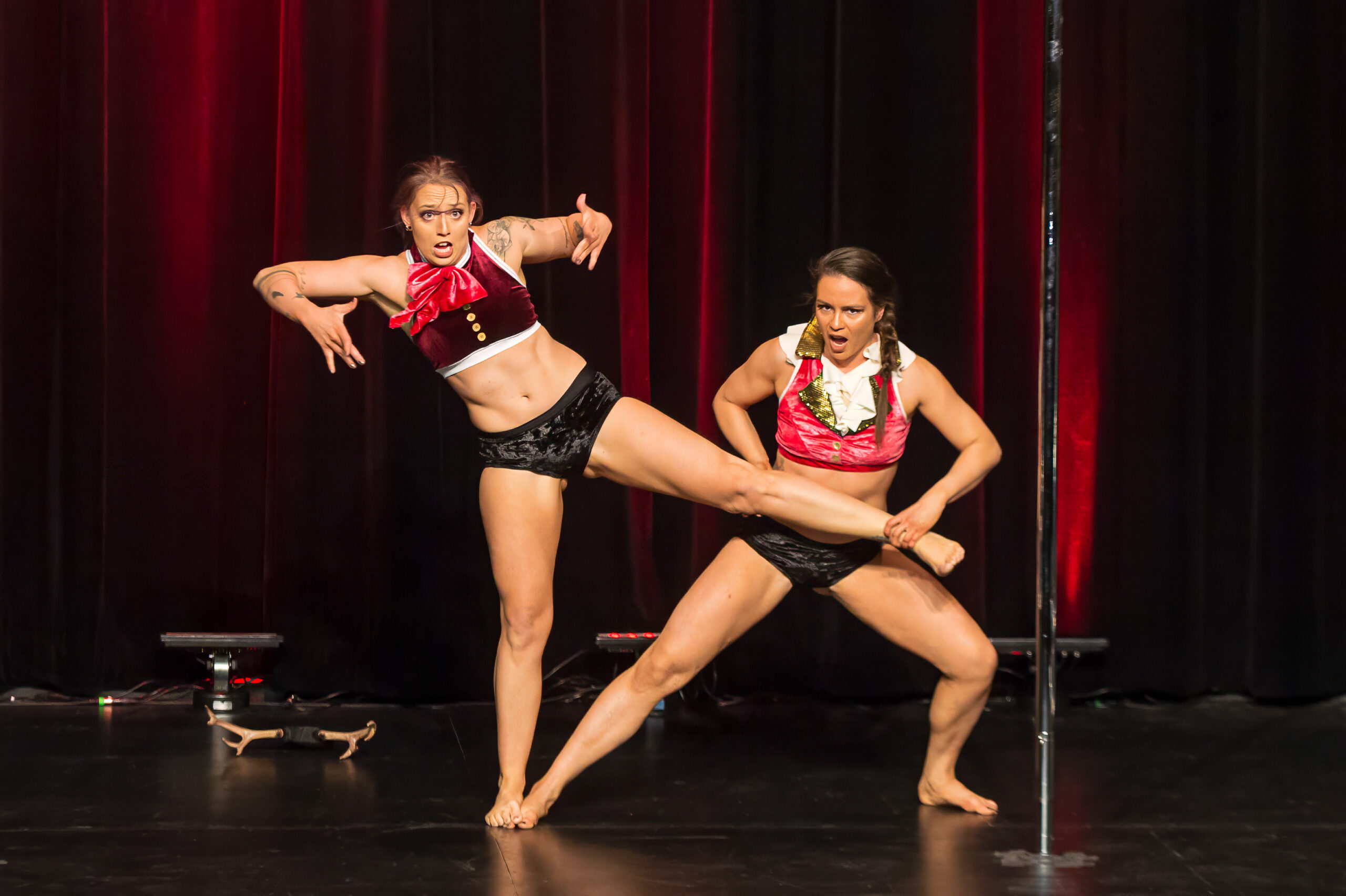
Experience
Your stage. Your moment.